

Douala – N’Djamena, the link of all hopes
Linking Chad and Cameroon by rail is an old dream now taking shape, thanks to the commitment of Presidents Idriss Deby Itno and Paul Biya.
Translated from French. Lire en français
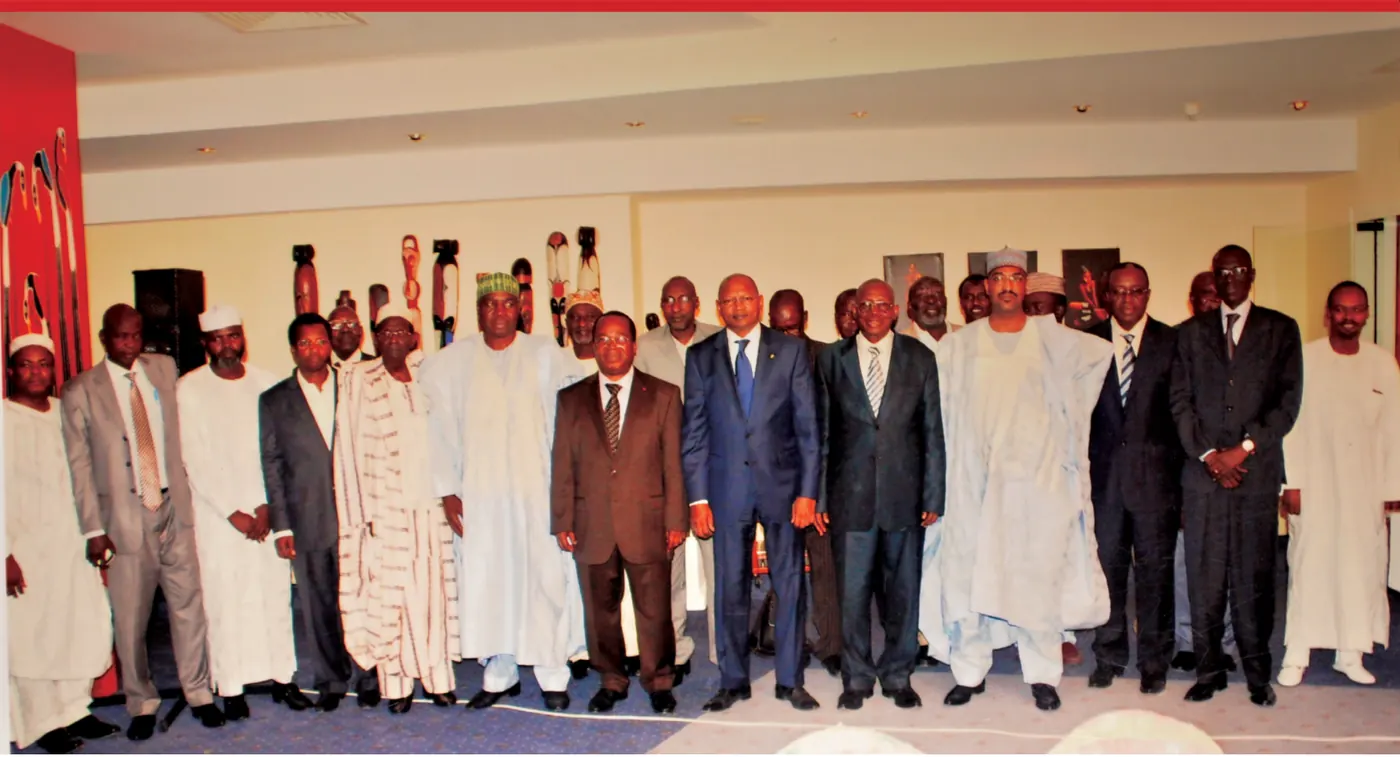
Linking Chad and Cameroon by rail is an old dream now taking shape, thanks to the determination of two pan-Africanists: H.E. Idriss Deby Itno of Chad and his counterpart Paul Biya of Cameroon. According to the authorities of both countries, ground should be broken on the extension of the Cameroonian railway to Chad by December 2016. The project, expected to cost around 2,000 billion CFA francs, will be financed by Chad and Cameroon with support from donors. The railway is expected to boost trade between the two countries.
The Cameroon/Chad Railway Commission (COMIFER CAMTCHAD) held its first ordinary session in Douala from 20 to 30 June 2014, pursuant to the N’Djamena Agreement of 3 June 2014 establishing the commission. Its purpose is the extension of the Cameroonian railway to Chad, in line with the schedule of activities approved by Chad’s Minister of Infrastructure, Transport and Aviation. The session was co-chaired by Prof. Robert Nkili, Cameroon’s Minister of Transport, and Ms Haoua Acyl Ahmat Aghbach, Chad’s Secretary of State for Civil Aviation and National Meteorology.
The technical partner chosen by both parties, Bolloré Africa Logistics, was represented by the Honourable Hamadou Sali, chairman of the board of Camrail, and Quentin Gérard, its managing director. The opening session was also attended by Joseph Beti Assomo, governor of the Littoral region, and H.E. Yoosem Kontou Noudjiamlao, Chad’s ambassador to Cameroon. The agenda covered: the composition of the commission; the financial arrangements for its operation; the functioning of the technical secretariat; the terms of reference of the feasibility study; the financing of that study; and the specifications for the technical partnership.
In their speeches, the two heads of delegation reaffirmed both states’ firm resolve to complete the extension of the Cameroonian railway to Chad, in keeping with the will of the two heads of state, Their Excellencies Paul Biya, President of the Republic of Cameroon, and Idriss Deby Itno, President of the Republic of Chad. They stressed the need to pool their efforts and reiterated their commitment to work together, with the chosen technical partner, to see this major project through.
Several resolutions were adopted at the close of the Douala meeting. They include: confirming the membership of COMIFER CAMTCHAD as soon as the ongoing appointment process is complete; adopting the financial arrangements and setting up, in each state, a mechanism to fund the commission’s activities; the appointment by the co-chairs of a focal point in each state to staff the technical secretariat; submitting the joint request for funding of the feasibility study to the African Development Bank (AfDB), once signed by the competent national authorities; and setting up a working group of Cameroonian and Chadian experts, due to meet in Douala from 15 to 17 July 2014 to finalise the terms of reference of the feasibility study and the technical partner’s specifications. The commission also visited Camrail’s central workshops in Bassa, Douala, where the two ministers praised the technical partner for the quality of its facilities and for its readiness to host the commission’s meetings.
Speeding up trade between the two countries
Cameroon and Chad are brotherly, friendly countries with strong economic ties as well as links in areas such as health and education. Thanks to the Chad-Cameroon pipeline, which carries Chadian oil to buyers, Cameroon earns substantial revenue every year. Over ten years, the Cameroonian Treasury received 200 billion CFA francs, according to Cotco (Cameroon Oil Transportation Company). This money covers transit fees, income tax, customs duties and other taxes, as well as income from Cameroon’s stake in the company that operates the pipeline.
Beyond this revenue, Cameroon is Chad’s leading trading partner in the CFA franc zone. According to Investir en zone franc (IZF), total trade (imports and exports) between Chad and the franc zone averaged 49.7 billion CFA francs between 2002 and 2005. It fell from 58.5 billion CFA francs in 2002 to 39.2 billion, an average decline of 13%. In 2005, however, Cameroon was Chad’s main trading partner within the franc zone, accounting for 82.3% of total trade, followed by Gabon (7.5%) and Côte d’Ivoire (4.2%).
Chad’s exports to Cameroon include groundnuts, live cattle, oilcake and other solid residues from vegetable fats or oils, and oilseeds and oleaginous fruits. In return, Cameroon exports food crops, canned goods, processed dairy products, beer and more. Chad also depends on Cameroon to export its products and to import goods from elsewhere in Africa and the world (Europe, Asia, the Americas). This is where the Autonomous Port of Douala comes in: most of Chad’s goods pass through it.
Given the difficulties of moving goods by road from Douala to N’Djamena, experts are convinced that extending the Cameroonian railway to Chad will solve a number of problems. “Goods that now take weeks to reach Chad could be delivered in 24 hours by train — why not in less than a day? You already know the benefits: more tax and customs revenue for both countries, invaluable time savings, and gains from fewer accidents involving trucks carrying goods by road. That is why the two heads of state launched this project,” explains a logistics and transport expert in Douala.
Ground-breaking in December 2016
According to Cameroon’s Minister of Transport, Prof. Robert Nkili, the foundation stone for the extension should be laid in 2016. “In the meantime, the commission must work with the technical partner, Bolloré Africa Logistics. We are negotiating and finalising the working documents we have to sign. We should have done so already — we have signed two or three. But the most important documents will be signed within fifteen days. Are there still adjustments to make? I would say we will not be behind schedule at all. We are certainly not flying blind: we have a compass that tells us where we are going and when we need to be where. We are not late. What we have done is break ground intellectually,” Robert Nkili said in June 2014.
According to the Cameroonian authorities, the project will cost thousands of billions of CFA francs. “It is more than 2,000 billion CFA francs. Add the cost of the studies and you can imagine the total. So who will finance it? As usual, we will turn to the donors who encourage us along this path. These donors are there to help countries that want to develop. But you cannot develop other than by relying on friends,” Robert Nkili explains.
Economic benefits
For Ms Haoua Acyl Ahmat Aghbach, Chad’s Secretary of State for Civil Aviation and National Meteorology, the project — which will link the city of Ngaoundéré, in Cameroon’s Adamaoua region, to the Chadian capital N’Djamena — will certainly boost economic activity between the two countries. “The length of the Ngaoundéré–N’Djamena line is a very technical question. The free movement of goods and people will strengthen socio-economic development in both countries. And free movement of goods also means import-export,” she told the Cameroonian press.
She also clarified the scope of the commission’s first ordinary session in June 2014. “Cooperation between Chad and Cameroon is nothing new. We are, above all, brothers. During this first session, the experts analysed the reference programmes in line with the agreement signed on 3 June 2014. That said, this is only the start-up phase. The work still lies ahead of us. But hand in hand, we will move towards this Ngaoundéré–N’Djamena railway. As for the timeline, we need a schedule of activities. That is why the technical partner will assist our Cameroonian and Chadian experts so that work can begin. It is not possible to give a timetable as such for now; we leave it to the experts to make their contribution. And we have not yet costed the project as such, so I prefer not to give any figure at this stage,” she explains.
Key dates in the long road to a Chad-Cameroon railway
- 1927: completion of the Douala–Yaoundé railway (307 km).
- 1931: feasibility studies for a Douala–Chad railway carried out by Colonel Milhau. “The project had a twofold aim: to help develop central and northern Cameroon, with a branch line to Moundou and Fort-Archambault [now Sarh].”
- 1958: creation of the Douala–Chad Railway Study Company.
- 27 October 1962: creation of the Chadian Railway Studies Office.
- 2 November 1962: Presidents François [Ngarta] Tombalbaye and Ahmadou Ahidjo sign, in Douala, a memorandum of understanding on extending the Trans-Cameroon railway to Chad; a Chad-Cameroon Joint Coordination Committee is set up.
- 1964: construction begins on the Yaoundé–Bélabo section (296 km).
- 1965: preliminary studies completed. “From Ngaoundéré, the line is to follow the northern Vina valley. It will first reach Touboro, then, after crossing the border, Baïbokoum; it will serve Moundou, Doba and Koumra, with its terminus at Fort-Archambault [now Sarh].”
- Author:
- Laure Wakam Lewe
- Published on:
- Tuesday, 1 July 2014
Related articles
Chadian gold in the BEAC's vaults?
Meeting in N'Djamena in early October, the BEAC board approved the framework for its programme to buy gold produced in the region. An ambitious project that could directly involve Chad's gold sector.

CEMAC Commission: what budget for what integration?
Behind the grand statements on regional integration lies a very practical question: how to fund community institutions? CEMAC's budget reveals a growing dependence on external financing.
Douala–Kribi–N'Djamena corridor: less paperwork, more trucks?
For landlocked Chad, the corridor linking it to Cameroon's ports is a vital artery. Several decisions taken in 2026 aim to cut transit times and costs. A first assessment.

IMF review of common policies: the lock on everything
CEMAC countries' economic programmes with the International Monetary Fund depend on a little-known regional exercise: the review of common policies. An explainer on an issue that weighs heavily on the zone's public finances.