
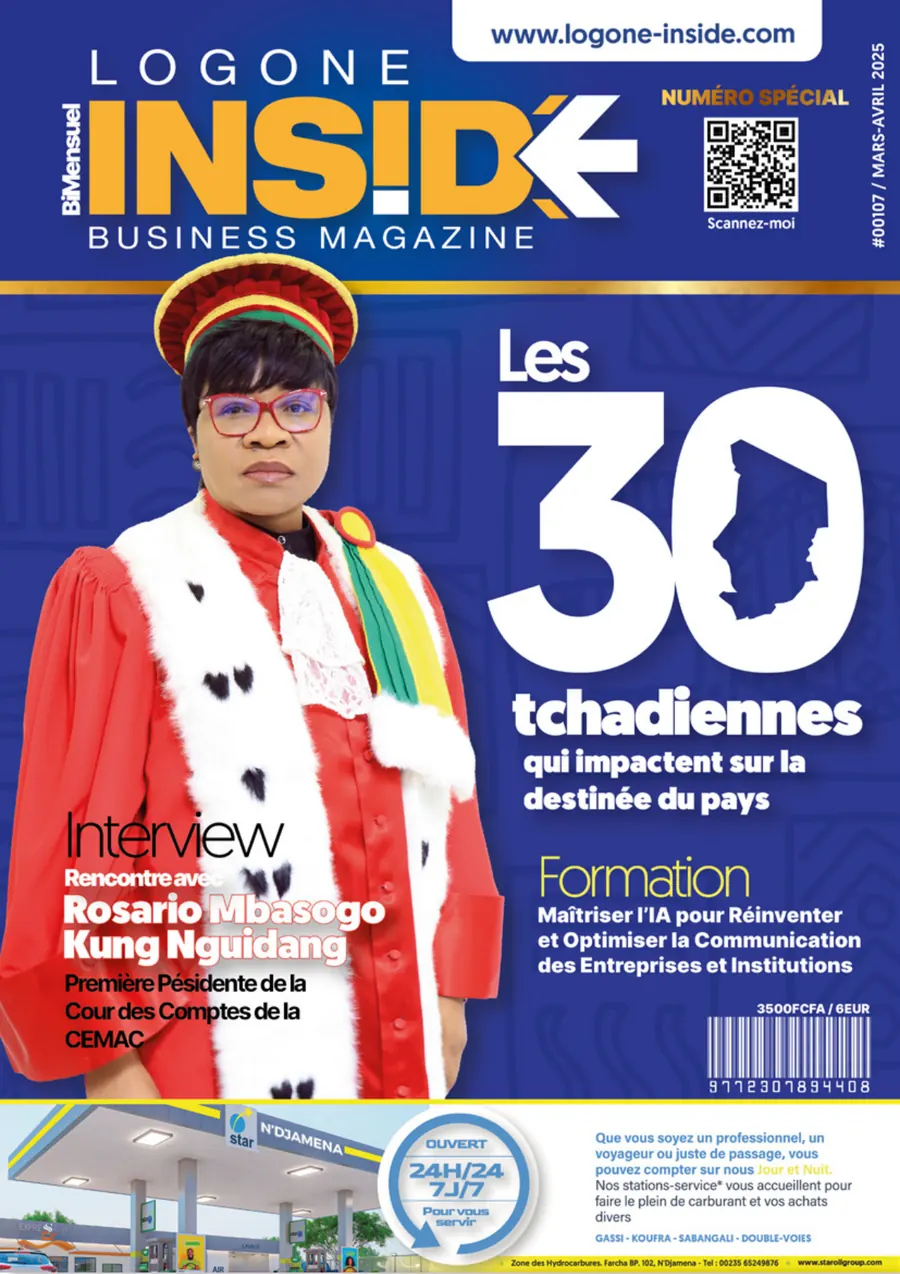
Meeting Ms Rosario Mbasogo Kung Nguidang, First President of the CEMAC Community Court of Auditors
Mandate, challenges, financial independence, fighting mismanagement, women’s place: the First President of the CEMAC Court of Auditors speaks candidly.
Translated from French. Lire en français
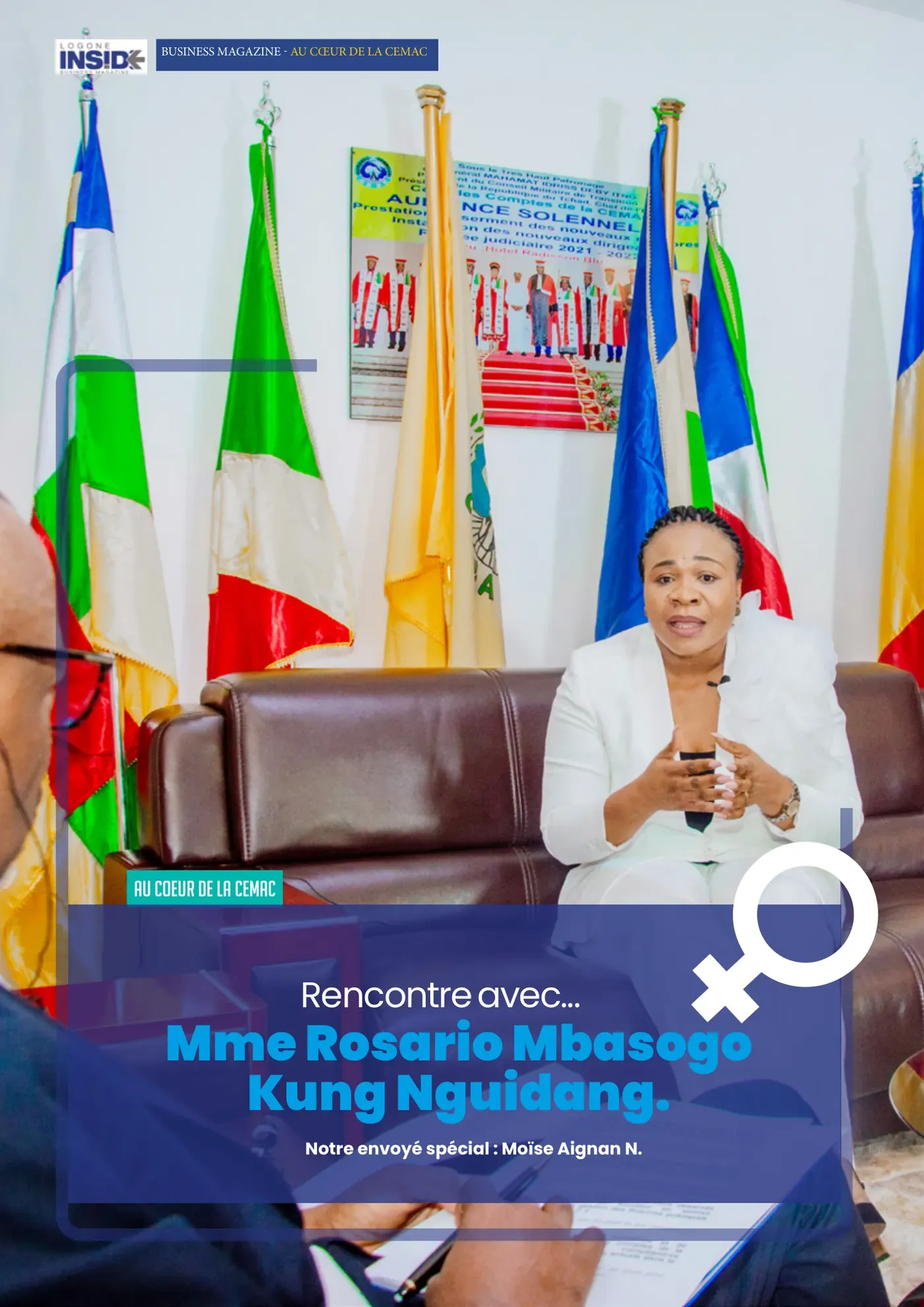
Trained at the Peoples’ Friendship University of Russia, Rosario Mbasogo Kung Nguidang embodies excellence and dedication. An accomplished polyglot, seasoned lawyer and recognised expert, she was chosen by the heads of state of the Central African Economic and Monetary Community (CEMAC) for the crucial role of watchdog over the Community’s public accounts. The choice has proved wise: her energy and determination match this ambitious and demanding mission.
Since being elected head of the Community Court of Auditors — and awarded the medal of Grand Commander of the CEMAC Order — she has driven positive change. She carries out her mission with unfailing dedication and exemplary rigour, and answers questions frankly and clearly, demonstrating her full commitment to transparency and good governance.
Madam President, could you briefly introduce the CEMAC Community Court of Auditors and its role?
The Community Court of Auditors oversees the financial management of all CEMAC institutions, bodies, specialised institutions and executing agencies. It ensures that Community public funds are used transparently, efficiently and in accordance with the budgetary and accounting rules in force.
Its role goes beyond simply checking the accounts. It helps improve the performance of Community institutions, promotes a culture of accountability and, above all, preserves the trust of member states and citizens in the management of public money. The Court therefore has a twofold vocation: to sanction financial irregularities, and to support Community institutions towards better management. This strategic role makes it a true pillar of financial transparency and of trust between member states. Through its reports and recommendations, the Court also plays an advisory role in financial management, making it a key player in good governance.
What are the Court’s main missions, and how do they help improve public financial management in the region?
The Court plays a central role in monitoring and promoting good financial governance at regional level. Its missions are built around three main areas:
- Judicial review of accounts: the Court checks the regularity and accuracy of the public accounts of CEMAC institutions and bodies. It judges public accountants — that is, it holds them liable for failings or irregularities in the management of Community funds.
- Performance audit: beyond purely accounting matters, the Court assesses how effectively and efficiently financial resources are used. This is essential to ensure that funds committed actually deliver the expected results in terms of development and regional integration.
- Opinions: the Court issues reasoned opinions on any financial matter. It also makes recommendations to CEMAC’s executive bodies to improve budget procedures and the quality of financial management.
Through these missions, the Court significantly improves transparency, accountability and financial discipline within CEMAC. Its reports help detect dysfunctions, prevent mismanagement and encourage a culture of responsibility. In short, the Court does not merely audit: it supports CEMAC towards modern financial governance based on transparency, performance and accountability.
As an audit body, what are your main challenges?
The Court’s real independence is limited by its lack of financial autonomy. Our action plan currently depends on funds allocated by the chief authorising officer, which limits our ability to plan and carry out audits independently. Moreover, our audit reports are not enforceable: they are submitted to the Council of Ministers and the Summit of Heads of State, the only final decision-makers. This limits the direct impact of our work on public financial management.
Our twofold challenge is therefore to secure our financial independence and to strengthen the legal force of our recommendations. We are calling for institutional reforms to ensure more transparent governance and better accountability. Despite these constraints, we pursue our mission rigorously, convinced of its importance for the Community’s future.
How does the Court work with national governments to improve financial transparency?
The Court does not directly audit the internal management of member states, but it monitors the use of resources provided by CEMAC. If a state receives Community funding for a specific project, the Court may examine how those funds were managed, without interfering in its overall public finances.
Beyond auditing, the Court plays a standard-setting role and works with national courts of auditors. It can advise them on applying Community financial texts and works with them to harmonise audit practices. A recent mission met national authorities to prepare the annual meeting of presidents of courts of auditors. These exchanges foster expertise-sharing and the application of Community standards, strengthening financial transparency at both national and regional levels.
Chad is a key CEMAC member. How does the Court assess public financial management there, and what do you recommend?
The Community Court does not judge national public financial management, including Chad’s; it focuses on funds from the CEMAC budget. That said, Chad has made major progress by turning its Audit Chamber into a full Court of Auditors, strengthening financial transparency and accountability. We congratulate the Chadian authorities and Ms Zara Ibrahim Mahamat Itno on their commitment to this modernisation, which will help the institution better fulfil its national and regional role.
This change is part of a drive for stronger governance, consistent with our recommendations. Cooperation between Chad’s Court of Auditors and our institution is exemplary, especially during our field missions. We encourage Chad to continue on this path, because an independent and effective national court is essential for CEMAC’s transparent management of public resources.
In terms of economic governance, what role does the Court play in fighting corruption and wasteful public spending?
It bears repeating that the Community Court is not meant to interfere in member states’ finances: we do not audit national finances. However, we have an important responsibility in proposing and regularising financial directives and texts within CEMAC. These texts are essential, because they set the common standards all member states must apply to ensure transparent, efficient and responsible management of Community resources.
In this context, the Court makes recommendations to improve the management of Community finances and to ensure that regional financial standards are respected. Although we do not directly audit national finances, we remain committed to promoting sound regional governance, making sure these standards are applied consistently and uniformly across all member states.
Does the Court have partnerships with other regional or international institutions?
Yes. The CEMAC Court of Auditors relies on several regional and international partnerships to build its capacity. We are members of major organisations such as AISCCUF, INTOSAI and AFROSAI, which are essential for public governance and audit cooperation. The First President is also vice-president of AISCCUF, which allows us to contribute actively to audit standards. We work closely with the ECOWAS Court of Auditors and that of Morocco to share good practice and harmonise our methods. These partnerships strengthen our expertise and ensure our work meets international standards.
What progress or reforms have you seen since taking office?
As a young institution, the CEMAC Court of Auditors first set up internal regulatory frameworks to ensure it runs properly, without using external consultants, which saved significant sums. Among the major advances, we audited the execution of the Community budget for the first time, covering 2019 to 2021. This made it possible to assess resource management and make recommendations to improve CEMAC’s financial efficiency. We are also preparing to present our annual public report to the Council of Ministers — a key document that will strengthen transparency and accountability in Community finances.
How does the Court develop the skills needed to meet today’s challenges?
Training and skills development are crucial priorities for us, but financial constraints limit our ability to carry out our full action programme. Recruiting auditors and court clerks in particular remains a major issue, because our resources do not allow us to meet these needs fully. Despite these constraints, we have launched several initiatives to keep developing our staff’s skills. We also take part every year in the AISCCUF congresses, which allow us to deepen our knowledge and share good practice with other audit institutions.
What future do you see for the Court in the coming years?
My term ends in 2025, but I am convinced my successor will continue and build on the work done. The Court will always play an essential role in rigorously managing Community funds and adapting its audit mechanisms to economic challenges and regional development projects. In the coming years it will need to strengthen its role in economic governance, notably by improving audits of Community budget execution and of funds allocated to states. Recruiting auditors and clerks remains a priority. If we obtain financial autonomy, the Court will be able to strengthen its independence and its action. Finally, I am convinced that with greater regional and international cooperation, the Court will become a more autonomous, effective and committed institution, always serving CEMAC’s economic development.
What do you think of 8 March?
International Women’s Day on 8 March is above all a day of reflection and celebration of equal opportunity. It reminds us that gender equality is a prerequisite for the development of our societies. Once women are offered equal opportunities, it is up to them to give their best in their field, whether in governance, public management or any other sector. Their contribution is essential to the development of their country, the sub-region and the African continent.
Equal opportunity is not only a question of rights; it also implies shared responsibility, in which every woman must seize the chances offered to excel and play a key role in the progress of her environment. This day is therefore not only a celebration, but also a call to collective responsibility, so that equal opportunity is not just a promise but a reality for all women.
Isn’t your youth an obstacle to carrying out the missions entrusted to you by the heads of state?
Youth should never be seen as an obstacle, but rather as an asset. At 33, I had the honour of holding senior positions such as Vice-President of the CEMAC Commission; before that, I was a Community expert actively involved in CEMAC’s institutional reforms. This experience gave me a clear vision and a deep understanding of our region’s economic and political issues. The heads of state entrusted me with this mission because of my skills and commitment. Youth is a dynamic force, able to adapt its strategies quickly to today’s challenges.
You are at ease in several international languages, including Russian. Isn’t that an asset?
Indeed, speaking several languages is a major asset in my work. Spanish, my mother tongue, as well as French and Fang — a language spoken in Equatorial Guinea, Cameroon and Gabon — allow me to communicate effectively with international and regional partners. I also speak Russian, having studied at university in Russia, and I am working on getting by in English. These skills help me navigate multicultural environments and defend CEMAC’s interests effectively on the world stage.
Can you outline your record at the head of the Court?
Since I arrived, we have taken essential steps to structure this young institution. We first put internal regulatory frameworks in place, avoiding external consultants and generating savings. Our main achievements include:
- the first audit of Community budget execution (2019-2021);
- harmonised financial processes across Community institutions for more transparent management;
- preparation of the Court’s annual report, soon to be presented to the Council of Ministers;
- closer cooperation with national and international courts of auditors, with exchange missions in member states.
Despite this progress, financial constraints limit the recruitment of auditors and clerks. We nonetheless remain committed to overcoming these obstacles.
The Court is widely seen as communicating poorly with the public and the CEMAC community. What is your view?
Communication is a major challenge for any institution. Lack of resources is an obstacle, but we are aware of the importance of making our work better known. As a young institution, we first had to lay solid foundations before prioritising communication. Several initiatives have nevertheless been launched: we are making our annual report more accessible and facilitating exchanges with the public through our international partnerships and information missions in member states. I am convinced these efforts will bear fruit.
Can the Court open investigations on the basis of a simple complaint?
We do not launch investigations on the basis of a simple complaint. However, we do receive complaints, often presented as requests for an opinion, about public financial management or perceived irregularities in Community institutions. These requests are examined rigorously and systematically. If relevant evidence is found, we may launch audit or investigation missions, always in line with internal procedures. The Court’s Prosecutor General may also act if a complaint calls for specific legal action.
Do you have examples?
Yes — there have been several cases in which the Court was asked for an opinion after Community institutions raised concerns about fund management or the application of CEMAC financial standards. These requests allow us to act as an advisory and regulatory body, ensuring that CEMAC finances are managed according to the principles of good governance and transparency.
Interview by our special correspondent, Moïse Aignan N.
- Author:
- Moïse Aignan N.
- Published on:
- Tuesday, 1 April 2025
Related articles

Chadian gold in the BEAC's vaults?
Meeting in N'Djamena in early October, the BEAC board approved the framework for its programme to buy gold produced in the region. An ambitious project that could directly involve Chad's gold sector.

CEMAC Commission: what budget for what integration?
Behind the grand statements on regional integration lies a very practical question: how to fund community institutions? CEMAC's budget reveals a growing dependence on external financing.

Douala–Kribi–N'Djamena corridor: less paperwork, more trucks?
For landlocked Chad, the corridor linking it to Cameroon's ports is a vital artery. Several decisions taken in 2026 aim to cut transit times and costs. A first assessment.

IMF review of common policies: the lock on everything
CEMAC countries' economic programmes with the International Monetary Fund depend on a little-known regional exercise: the review of common policies. An explainer on an issue that weighs heavily on the zone's public finances.